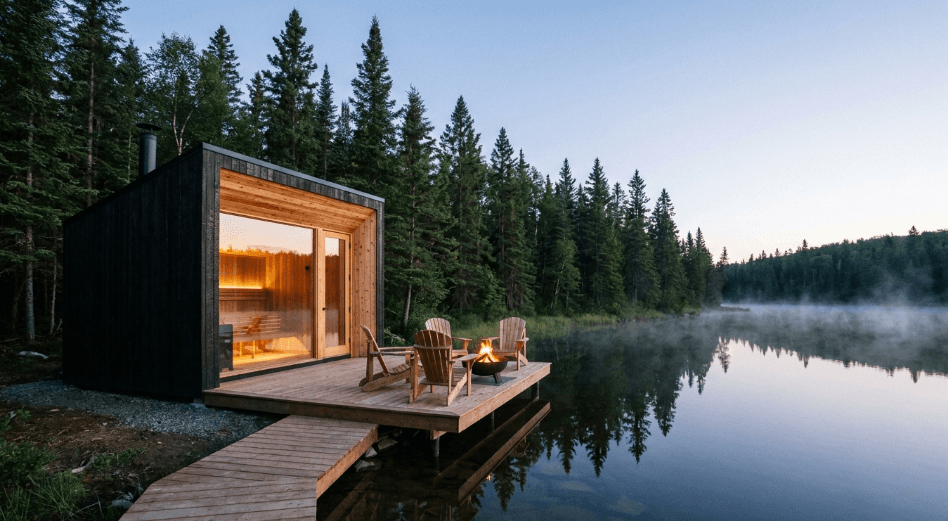
The three most common budget foundations for an outdoor sauna are compacted gravel, a poured concrete pad, and an existing wood deck, ranging roughly from $200 for a basic gravel bed to $2,500 or more for a full concrete pad with footings. Gravel is the cheapest and most DIY-friendly option, concrete lasts the longest with the least upkeep, and an existing deck can eliminate the foundation cost entirely if it is structurally sound.
Gravel: The Lowest-Cost Starting Point
A compacted gravel bed, typically 4 to 6 inches of crushed stone over a leveled and tamped subgrade, runs $200 to $600 in materials for a small cabin footprint if you do the labor yourself. It drains well, which matters more for an outdoor structure than people expect, since standing water under a cabin base accelerates rot and rust over a few seasons. The tradeoff is that gravel can shift slightly over time and may need topping up every few years, and it is not ideal on a slope without added edging or a retaining border to keep it in place.
Concrete: The Higher Upfront Cost That Rarely Needs Attention Again
A poured concrete pad sized for a small cabin generally runs $1,200 to $2,500 including forms, rebar, and a professional pour, though a simpler concrete paver base laid without a full pour can land closer to $500 to $900 as a DIY weekend project. Once cured, concrete needs essentially no ongoing maintenance and provides the most stable, level surface of the three options, which matters for a heavier traditional cabin with a stove or large heater. For a tight budget, concrete pavers set in a compacted sand base split the difference, offering most of the stability of a full pour at a fraction of the material and labor cost.
Using an Existing Deck to Skip the Foundation Cost Entirely
If a home already has a wood deck in a suitable spot, placing a smaller cabin directly on it can eliminate the foundation line item from the budget almost completely. The deck needs to be structurally sound, with joists spaced and sized for the added static weight of the cabin, heater, and users, which is worth a quick check with a contractor or an engineer before committing, particularly for anything heavier than a compact infrared unit. A deck also needs enough clearance and ventilation underneath to avoid trapping moisture against the cabin’s floor, which a raised skid foundation handles naturally but a tight, low deck sometimes does not.
How Much Does Drainage Actually Matter on a Budget?
Water management is the part of foundation planning that budget builders skip most often, and it is usually the cheapest part to get right. A gravel bed with a gentle slope away from the cabin, or a simple French drain along the low side of a concrete pad, adds relatively little to material cost but prevents the slow rot and rust that shortens a cabin’s usable life. Skipping this step to save a modest amount up front is the single most common regret builders mention once a foundation starts holding water after a few wet seasons.
Which Choice Actually Fits a Tight Budget Best?
For most first-time buyers watching every dollar, a compacted gravel bed with paver support points under the cabin’s corners is the practical starting point: cheap, DIY-friendly, and adequate for a small to mid-size cabin as long as drainage is planned from the start. Buyers who plan to keep the cabin in place for many years, or who are installing a heavier traditional build, often find the extra cost of a proper concrete pad worthwhile over a five to ten year horizon, since it avoids releveling or foundation repair later. Comparing cabin weight and footprint across different sizes before deciding on a foundation type helps avoid over- or under-building the base, and the team at SweatDecks lists cabin dimensions and approximate weights that make that comparison easier.
What Else Affects the Site Beyond the Base Itself?
Level ground matters as much as the material chosen. A base that is out of level by even an inch or two across a cabin’s footprint can stress door frames and wall joints over time, leading to gaps that let heat escape and undercut the whole point of a well-insulated build. Checking level carefully during installation, regardless of which foundation type is chosen, is a free step that protects the investment in everything above it.
Is a Well-Sited Sauna Worth the Extra Planning?
A properly leveled, well-drained foundation protects both the cabin’s lifespan and the experience the research actually points to. A Mayo Clinic Proceedings review found sauna bathing associated with a range of cardiovascular and general health benefits in regular users, and a 2023 follow-up review in the same journal reported similar associations when sauna habits were combined with other lifestyle factors. A separate systematic review reported comparable associations across regular sauna users more broadly. These remain association findings from long-term cohort data, not proof that sauna use alone changes outcomes, but a foundation built to last means a household actually gets years of consistent use out of the investment rather than a cabin that starts sagging or leaking within a season or two.
Frequently Asked Questions
What is the cheapest foundation for an outdoor sauna?
A compacted gravel bed with paver support points is usually the least expensive option, often $200 to $600 in materials for a small cabin footprint done as a weekend DIY project.
Does a concrete pad last longer than gravel?
Yes, generally. A properly poured concrete pad rarely needs attention again, while a gravel bed can shift or need topping up every few years, though gravel is far cheaper up front.
Can I put an outdoor sauna directly on an existing wood deck?
Often yes, if the deck is structurally sound and rated for the added weight, which avoids new foundation costs entirely. Confirm joist spacing and condition before placing a heavier traditional cabin.
How much does drainage add to a budget foundation?
A basic gravel base with a slight slope away from the cabin costs little beyond the gravel itself. Skipping drainage planning to save money is one of the more common regrets among budget builders.
Do I need a permit for a small foundation pad?
Requirements vary by city and county, and many places exempt small, non-permanent accessory structures below a certain size, but it is worth a quick call to the local building office before pouring or building anything.
References
- Cardiovascular and Other Health Benefits of Sauna Bathing: A Review of the Evidence, Mayo Clinic Proceedings, 2018
- Does the Combination of Finnish Sauna Bathing and Other Lifestyle Factors Confer Additional Health Benefits? A Review of the Evidence, Mayo Clinic Proceedings, 2023
- Clinical Effects of Regular Dry Sauna Bathing: A Systematic Review, Evidence-Based Complementary and Alternative Medicine, 2018